
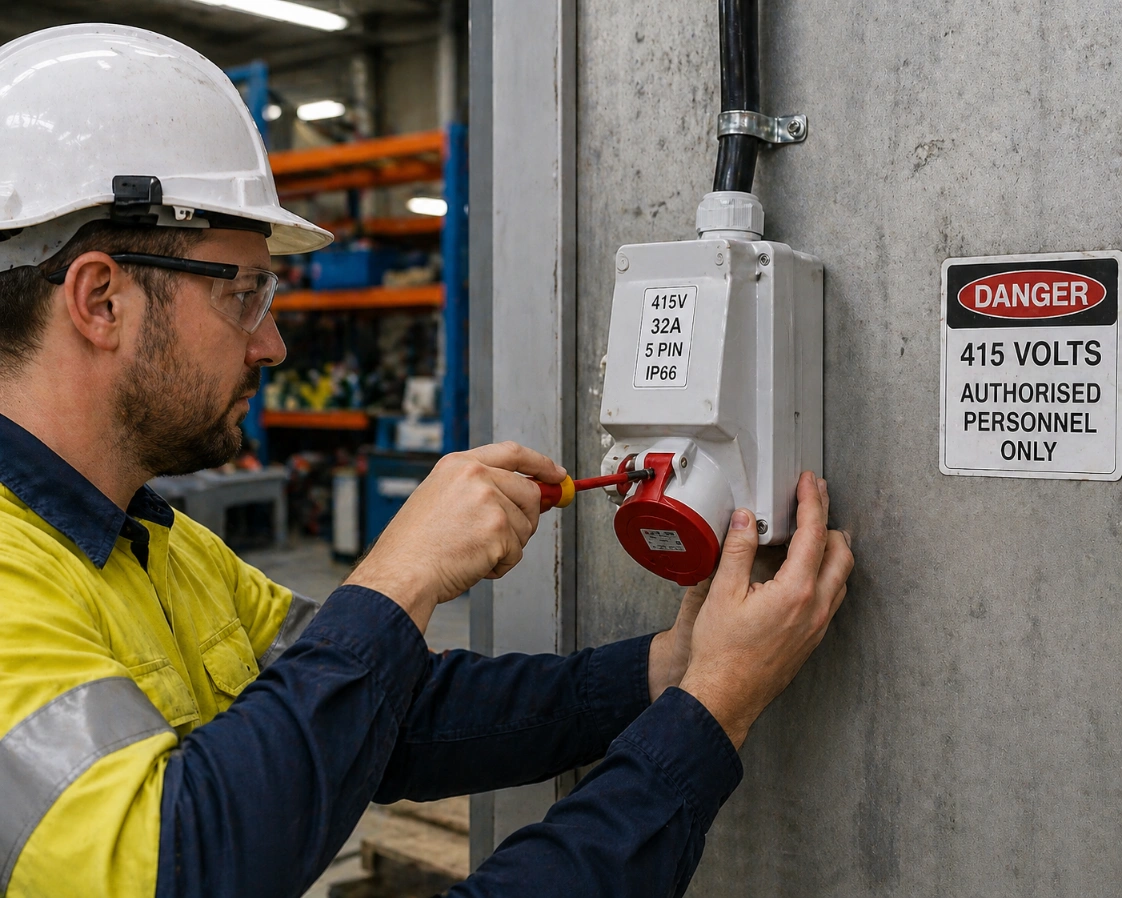
For most people, electricity is a “plug it in and forget about it” kind of thing. We flip a switch, and the lights come on. However, as our homes grow larger and our businesses become more tech-heavy, the standard power setup that served us for decades is often no longer enough. This brings us to a topic that is becoming increasingly common in Sydney’s Inner West: 3 phase power.
If you’ve recently purchased a high-powered electric vehicle, installed a ducted air conditioning system, or are running a workshop in Marrickville, you’ve likely heard this term mentioned by an electrician. But what exactly is it, and do you actually need it? This guide will demystify the 3 phase power setup, comparing it to standard residential supply and helping you decide if an upgrade is the right move for your property.
Understanding the Basics: Single Phase vs. 3 Phase Power
To understand a three phase power system, we first need to look at what most Australian homes currently have: single-phase power.
Single-Phase Power
Most traditional homes in Australia operate on a single-phase supply. This consists of two wires: one “active” wire that carries the current into the home and one “neutral” wire that returns it. Think of it like a single-cylinder engine. The power comes in pulses or waves. While this is perfectly fine for running a fridge, a TV, and some lights, it has a physical limit on how much total energy it can deliver at once.
3 Phase Power
A 3 phase power supply, as the name suggests, uses three active wires instead of one. These three currents are “out of phase” with each other, meaning they reach their peak voltage at different times.
Imagine three people pushing a heavy merry-go-round. If one person pushes (single phase), there are moments between pushes where no force is applied. If three people push at staggered intervals (3 phase power), the force is constant, smooth, and much more powerful. This allows a 3-phase electrical system to deliver three times as much power as a single-phase setup using the same amount of infrastructure.
Why Businesses Rely on a Three-Phase Power System
For the commercial sector, this isn’t just an upgrade; it’s a requirement. An industrial power supply is designed to handle the heavy lifting of modern machinery.
Businesses such as cafes with commercial espresso machines, woodshops with large table saws, or warehouses with cool rooms require a 3 phase power supply for several reasons:
- Motor Efficiency: Large electric motors (like those in lifts or industrial fans) start more easily and run more efficiently on three phases.
- Equipment Longevity: Because the power delivery is constant rather than pulsing, there is less vibration and heat build-up in machinery, extending the life of expensive assets.
- Higher Load Capacity: An industrial power supply prevents “nuisance tripping” when multiple high-drain machines are switched on simultaneously.
7 Signs Your Home Needs a 3 Phase Power Upgrade
Once reserved for factories, 3 phase power is now a serious consideration for everyday Australian homes. Here are the most common scenarios where Inner West homeowners should consider the switch.
1. Large-Scale Air Conditioning
If you are moving away from split systems and installing a powerful ducted air conditioning unit to cool a multi-storey home, you may exceed the capacity of a single-phase board. A 3-phase electrical system ensures your AC can start up without causing the lights to flicker across the rest of the house.
2. High-Speed EV Charging
While a standard 7kW EV charger works on single phase, those who drive long distances or own multiple electric vehicles often want faster charging. A 22kW home charger requires a 3-phase power supply. This can reduce your charging time from 10 hours down to less than 3.
3. Electric Instantaneous Hot Water
Most Australians use gas or tank-based electric hot water. However, if you choose a high-end instantaneous electric system for endless hot water, these units draw massive amounts of current that only a 3-phase power setup can comfortably provide.
4. Luxury Kitchen Upgrades
Modern “professional-grade” kitchens are a huge trend in the Inner West. If you are installing a 900mm induction cooktop alongside multiple pyrolytic ovens and a steam oven, your total kitchen load could easily overwhelm a standard single-phase connection.
5. Running a Home Workshop
If your garage is full of heavy-duty lathes, welders, or car hoists, these machines often come with 3-phase plugs as standard. Attempting to run these on a converter or a single-phase line can lead to poor performance and blown fuses.
6. Solar Power Optimisation
If you have a large solar array (over 5kW–6kW), many energy retailers and networks limit how much solar you can export back to the grid on a single phase. Upgrading to 3-phase power allows you to install a larger solar system and export more energy, potentially increasing your feed-in tariff returns.
7. Modern Smart Home Infrastructure
Homes today are packed with tech, from server racks for home automation to heated swimming pools and spas. A three-phase power system provides the headroom needed to ensure all these luxuries run smoothly without compromise.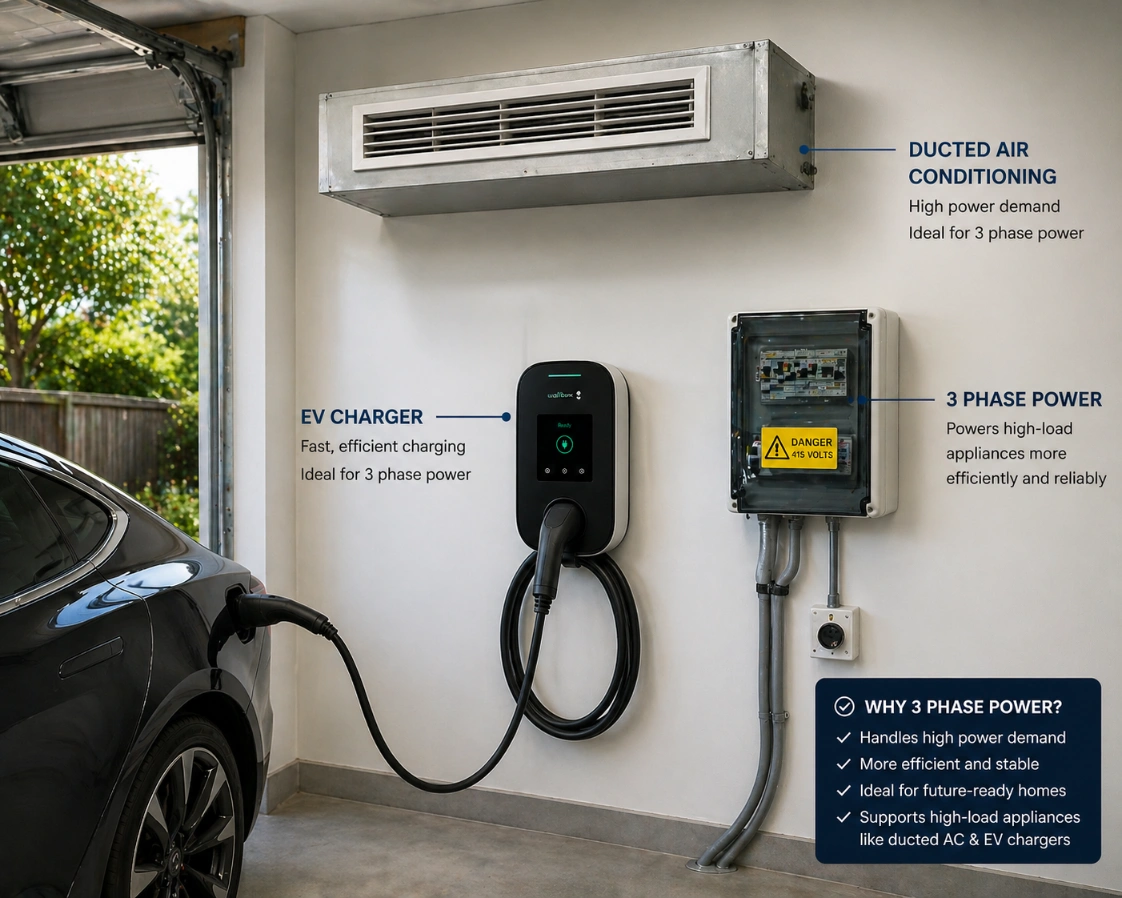
The Technical Advantage: Load Balancing
One of the greatest benefits of a 3-phase electrical system is “load balancing.” In a single-phase home, all your appliances are pulling from one “pipe.” In a home running 3-phase power, your electrician can split the loads across the three different phases.
For example, your heavy air conditioner could be on Phase A, your kitchen and laundry on Phase B, and your lights and home office on Phase C. This distribution prevents any single wire from becoming overloaded, significantly increasing the safety and stability of your home’s electricity.
The Installation Process: What to Expect
Upgrading to 3-phase power is a significant undertaking that involves coordination between your electrician and the local network provider (such as Ausgrid or Endeavour Energy).
- Mains Assessment: Your electrician will check whether the street-level cables can support the upgrade. In some older Inner West streets, this is the first hurdle.
- Level 2 Electrician Works: You will need a Level 2 ASP electrician to disconnect your old service and install the new 3-phase overhead or underground service lines.
- Switchboard Upgrade: Your old board must be completely replaced. A 3-phase power board is larger and requires new circuit breakers and safety switches (RCDs) for every phase.
- Internal Rewiring: While a full rewire is rarely necessary, your electrician will reconfigure how your existing circuits connect to the new three-phase supply to ensure the load is balanced.