
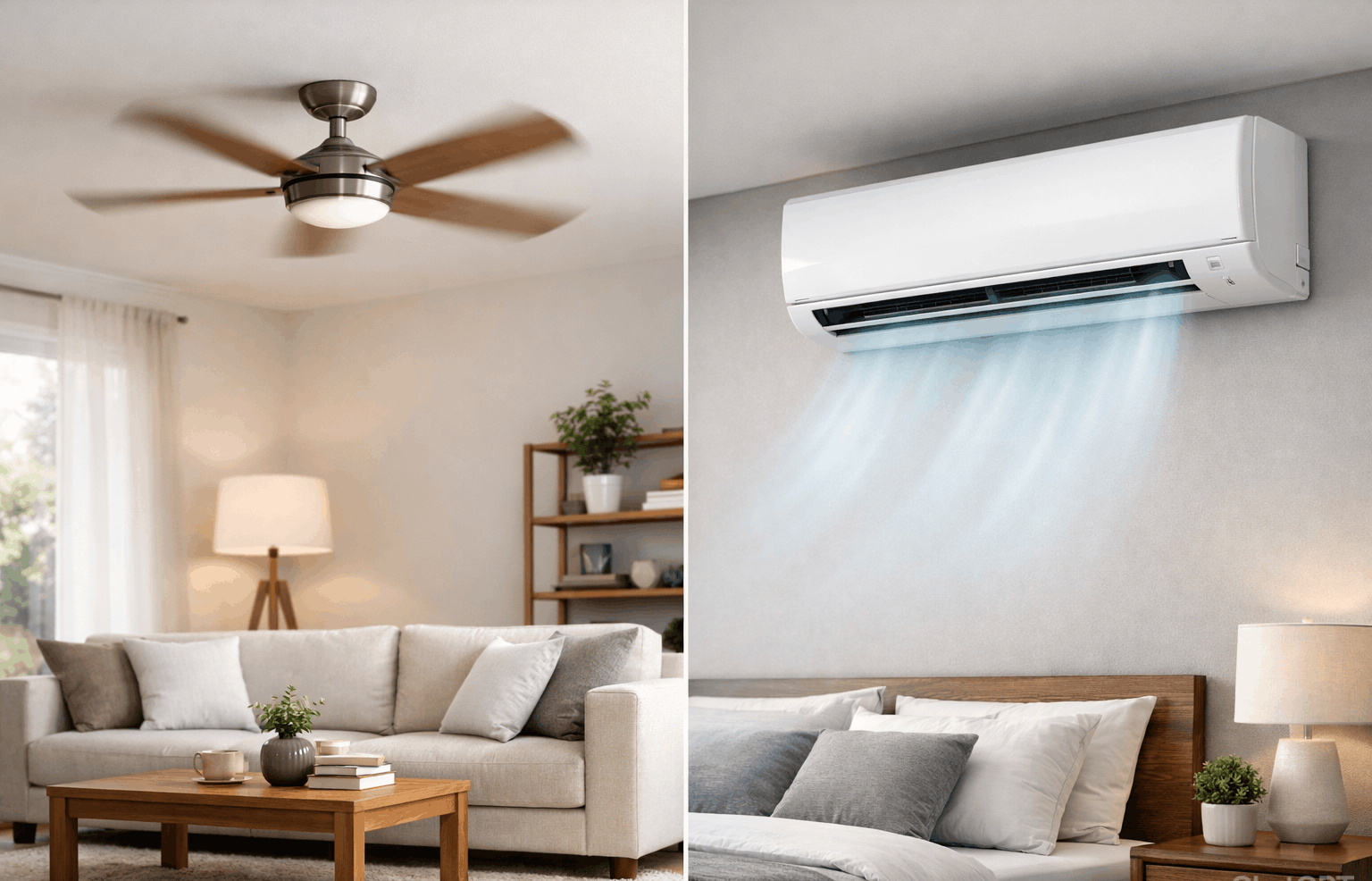
When it comes to staying comfortable through Sydney’s hot and humid summers, many homeowners ask the same question: ceiling fan vs air conditioner, which one is better? Both options have their advantages, but the right choice depends on your home, budget, and cooling expectations.
In this guide, we compare performance, energy use, installation costs, and long-term value so you can make the right decision for your property.
How a Ceiling Fan Works
A ceiling fan does not actually lower the room temperature. Instead, it circulates air and promotes cross ventilation to create a wind chill effect on your skin. This makes you feel cooler even though the actual air temperature stays the same.
Ceiling fans are ideal for:
- Bedrooms
- Living areas with good ventilation
- Mild to moderately warm climates
- Homes looking to reduce electricity bills
Because they use minimal power, ceiling fans are one of the most cost-effective cooling solutions. Professional ceiling fan installation ensures correct wiring, proper support bracing, and safe operation.
How an Air Conditioner Works
An air conditioner actively cools the air by removing heat and moisture from the room. It uses refrigerant cycles and a compressor to reduce indoor temperature.
Air conditioners are ideal for:
- Extremely hot days
- Humid conditions
- Larger homes
- Households wanting precise temperature control
A properly installed split system or inverter air conditioner can significantly improve comfort, especially during peak summer heatwaves.
Ceiling Fan vs Air Conditioner: Energy Efficiency and Running Costs
When comparing a ceiling fan vs air conditioner, energy consumption is one of the biggest factors.
A ceiling fan typically uses between 10 and 75 watts of electricity. In contrast, a reverse cycle air conditioner can use anywhere from 1,000 to 3,500 watts depending on the size and model.
If lowering power bills is your main goal, a ceiling fan wins easily. However, if you need actual temperature reduction rather than air circulation, an air conditioner becomes necessary.
Many Sydney homeowners combine both systems. Running a ceiling fan alongside your air conditioner allows you to raise the thermostat setting by a few degrees without sacrificing comfort, helping to lower your overall energy consumption.
Installation Costs and Requirements
Ceiling Fan Installation
Ceiling fans are generally cheaper to purchase and install. However, installation must be completed by a licensed electrician to meet Australian electrical safety standards.
Costs depend on:
- Existing wiring
- Ceiling height
- Switch upgrades
- Whether remote control systems are added
Incorrect DIY installation can create electrical hazards, which is why hiring a professional electrician in Sydney is essential.
Air Conditioner Installation
Air conditioning installation is more complex. It may involve:
- Dedicated electrical circuits
- Switchboard upgrades
- Outdoor condenser placement
- Wall penetrations
If your switchboard is outdated, you may require a switchboard upgrade before installing a new cooling system.
Cooling Performance Comparison
In the debate of ceiling fan vs air conditioner, performance depends on expectations.
- A ceiling fan improves airflow but does not cool the air.
- An air conditioner lowers the actual room temperature.
On extremely hot days above 35°C, a fan alone is unlikely to provide sufficient comfort. In coastal suburbs or the more temperate parts of Sydney, however, a ceiling fan can be adequate for most of the year.
Running Costs Over Time
Ceiling fans cost only a few cents per hour to operate. Air conditioners cost significantly more, especially if used continuously.
If keeping costs down year-round is a priority, ceiling fans are the more economical choice. However, for homes with insulation issues or west-facing windows, air conditioning may be necessary for health and comfort.
Maintenance and Lifespan
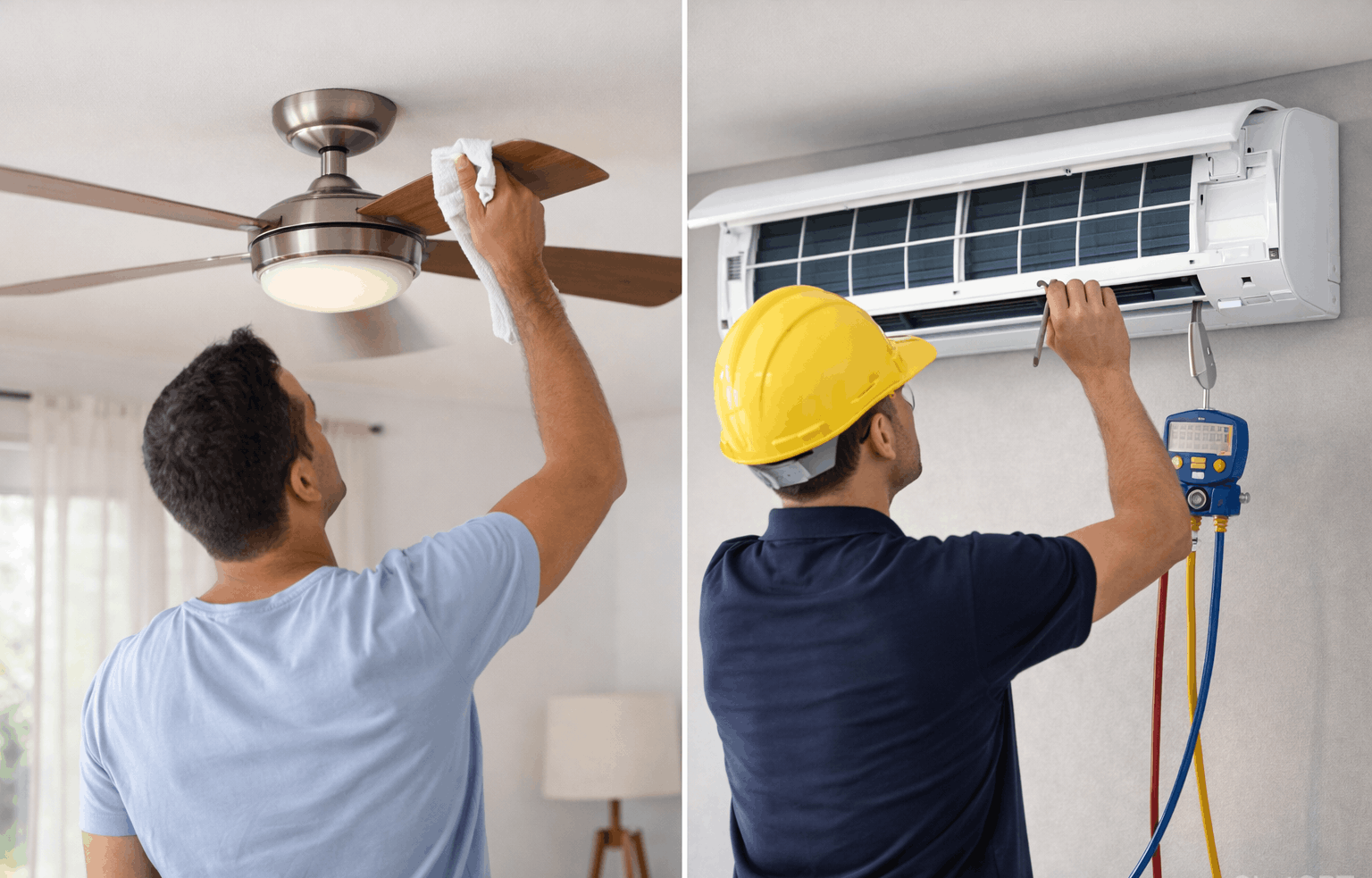
Ceiling fans require minimal maintenance. Occasional cleaning and checking of electrical connections are usually sufficient.
Air conditioners require:
- Filter cleaning
- Professional servicing
- Refrigerant checks
- Drain inspections
Regular servicing by a qualified electrician or air conditioning technician ensures system longevity and safe operation.
When to Choose Both
Many Sydney households now install both systems. Using a ceiling fan in conjunction with air conditioning improves airflow and reduces the workload on the cooling unit.
This combination offers:
- Lower electricity bills
- Better air distribution
- Increased comfort
- Longer system lifespan
Sometimes the best solution is not choosing one over the other, but integrating both systems strategically to get the most out of your home’s cooling setup.
Electrical Safety Considerations
Any cooling appliance must be safely connected to your home’s electrical system. Faulty wiring can lead to overheating, tripped circuits, or fire risks.
Before installation, it is wise to arrange:
- Electrical safety inspection
- Power point upgrades if required
- Circuit load assessment
A qualified electrician ensures compliance with NSW regulations and prevents costly future issues.