
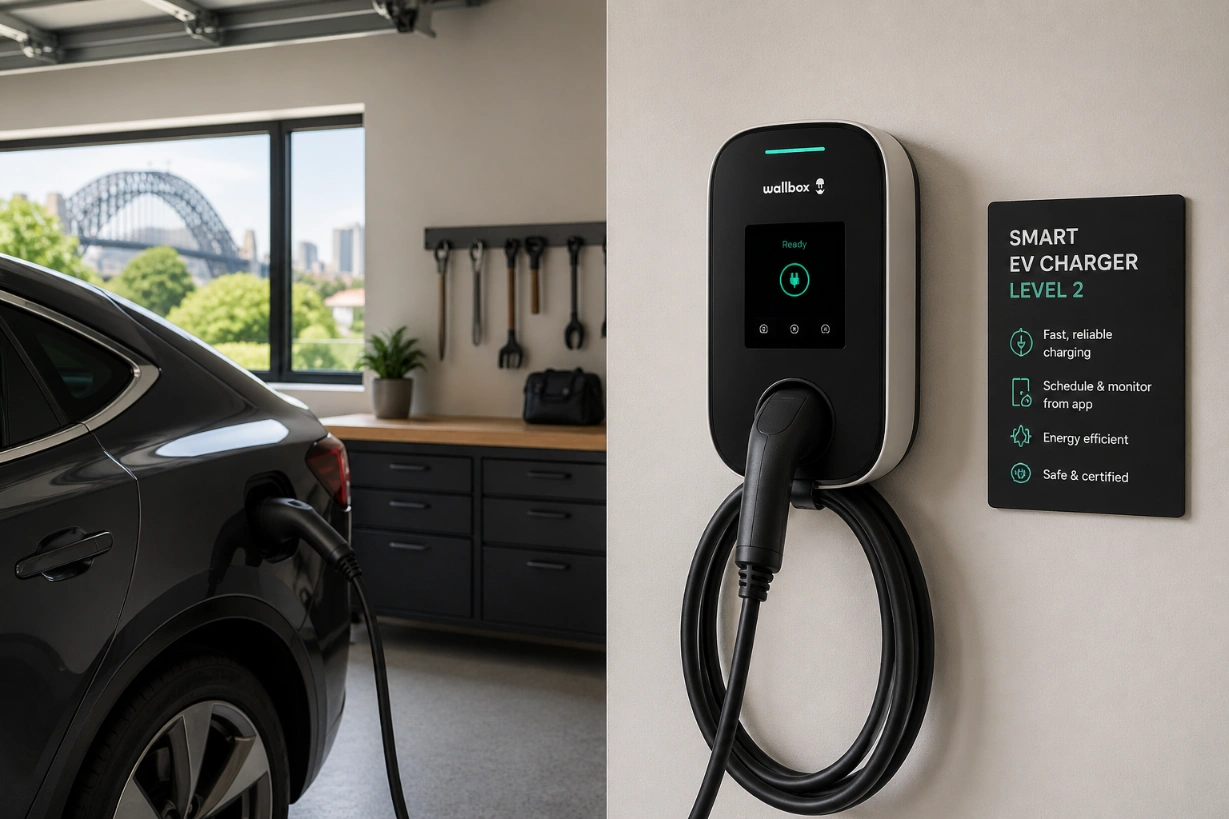
The shift towards electric mobility is no longer a futuristic concept for Australians. It’s now a reality. As more residents across Sydney’s Inner West trade in their petrol cars for quiet, efficient electric vehicles, the conversation has shifted from “range anxiety” to the logistics of a residential EV charger setup.
While public charging networks are expanding, the vast majority of charging, approximately 80%, happens at home. Having a dedicated EV charger installation means your vehicle is always ready to go, fuelled by the cheapest possible electricity (especially if you have solar). However, installing a high-powered electrical appliance isn’t as simple as plugging in a toaster. It requires careful planning, load assessment, and professional expertise.
Why Home Charging is the Gold Standard
For the average Aussie commuter, a home EV charge offers unparalleled convenience. Instead of searching for an available public station and waiting for an hour, you simply plug in when you arrive home and wake up to a “full tank”.
Beyond convenience, a professional EV charger installation is a financial masterstroke. By charging during off-peak windows or utilising excess solar generation during the day, the “fuel” cost of an EV can be as low as 2 to 3 cents per kilometre, compared to 15 to 20 cents for a petrol vehicle.
Types of EV Charging for Australian Homes
Before booking your electric vehicle charger installation, it’s worth understanding the “Levels” of charging available in the Australian market.
Level 1: The “Granny” Cable
This is the standard 3-pin plug cable that comes with most cars. It plugs into a standard GPO. While it requires no special EV charging station installation, it is incredibly slow, adding only about 10–12km of range per hour. For most, this is a backup solution rather than a primary charging method.
Level 2: The Dedicated Wallbox
This is the standard for a residential EV charger setup. These units are hardwired into your home’s electrical switchboard. They typically operate at 7kW (Single Phase) or up to 22kW (Three Phase). A 7kW EV charger installation can fully charge most EVs (including a Tesla or BYD) overnight, adding roughly 40–50km of range per hour.
The 5-Step Process for EV Charging Station Installation
A professional electric vehicle charger installation follows a strict protocol to ensure safety and longevity. Here’s how we handle the process at Inner West Electrical Solutions.
1. Site Assessment and Load Calculation
Before we even touch a screwdriver, we must determine if your home can handle the extra load. A 7kW charger draws about 32 Amps. In an older Inner West terrace, your total house limit might only be 60 Amps. We perform a “Maximum Demand” calculation to ensure that running your charger while the oven and AC are on won’t blow your main fuse.
2. Switchboard Audit and Upgrade
If your switchboard still uses old ceramic fuses, a switchboard upgrade is mandatory before an EV charger installation. We must install a dedicated circuit breaker and a Type B RCD (Residual Current Device), which is specifically designed to handle the unique electrical signatures of EV batteries.
3. Cable Routing
We determine the most efficient path from your switchboard to your parking spot. In Balmain or Leichhardt, this often involves navigating narrow sub-floors or installing neat conduit along external brickwork.
4. Mounting and Hardwiring
We mount the charging unit at an ergonomic height. We ensure the EV charging station installation is weather-rated if it’s being placed in a carport or driveway rather than a fully enclosed garage.
5. Commissioning and Testing
We don’t just walk away once the lights turn on. We test the earth loop impedance and ensure the “handshake” between the charger and your specific vehicle is seamless.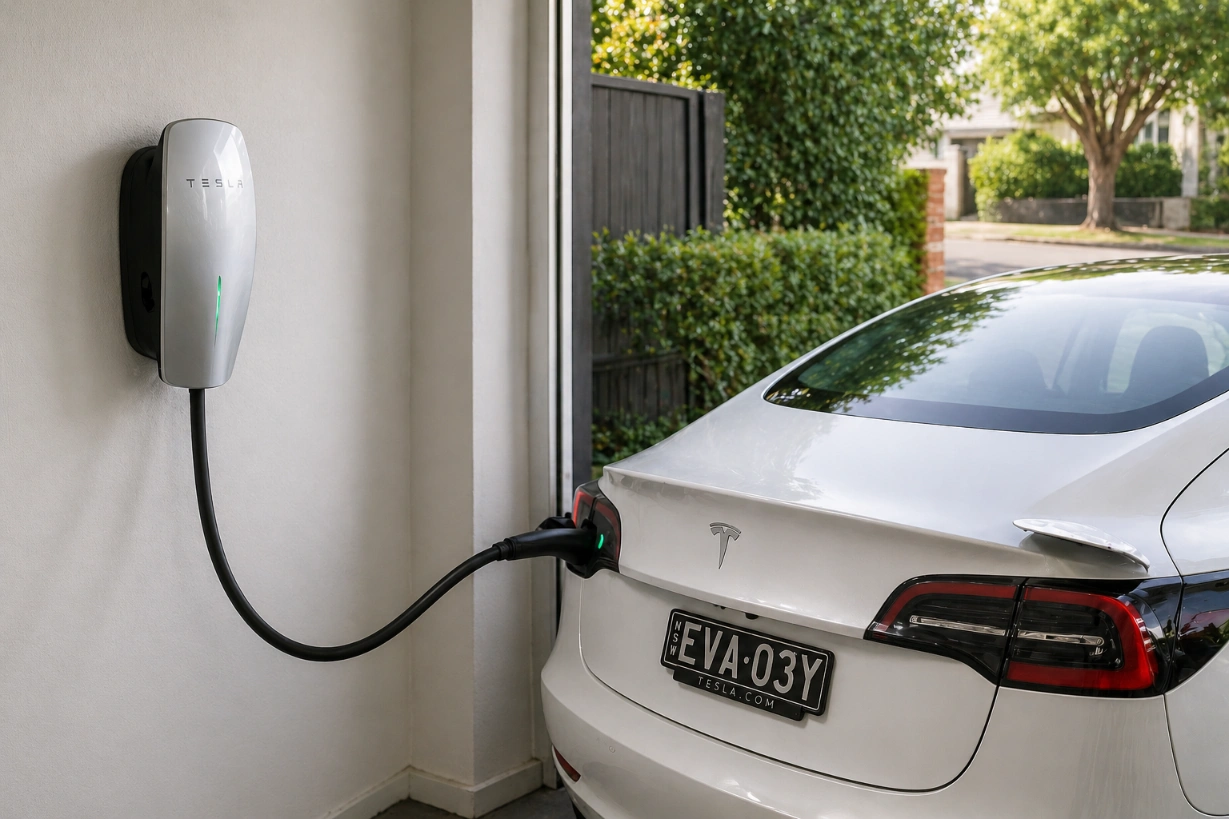
Maximising Efficiency: Solar and Smart Charging
In Australia, the “Holy Grail” of a home EV charge is powering your car with sunshine. Many modern chargers offer “Solar Tracking.” This means the charger monitors your solar inverter; if your house is producing 5kW of excess solar, the charger will automatically adjust its speed to consume exactly 5kW, essentially giving you free transport.
Even without solar, a smart residential EV charger setup allows you to schedule charging for “Solar Sponge” windows (usually 10 am – 3 pm) or late-night off-peak periods when the grid is under less pressure.
Heritage Home Challenges in the Inner West
Installing a charger in a modern home is straightforward. However, the Inner West is famous for its heritage terraces. These present unique challenges for electric vehicle charger installation:
- Shared Driveways: Navigating power access in shared spaces requires specific strata approvals and sub-metering.
- Mains Capacity: Many older streets have limited capacity. We may need to install a “Load Management” device to throttle the charger if the house starts drawing too much power.
- Aesthetics: We understand you don’t want ugly industrial conduit running across your heritage façade. We take pride in “invisible” or highly discreet installations.
Choosing the Right Hardware
When selecting a unit for your EV charging station installation, consider the following:
- Tethered vs. Untethered: A tethered charger has the cable permanently attached. An untethered charger requires you to bring your own cable. Tethered is generally more convenient for daily home use.
- App Connectivity: Look for chargers with Wi-Fi or Bluetooth so you can monitor your home EV charging and energy costs on your phone.
- Durability: Ensure the unit has an IK08 impact rating and at least an IP54 weather rating for the harsh Australian sun and rain.