
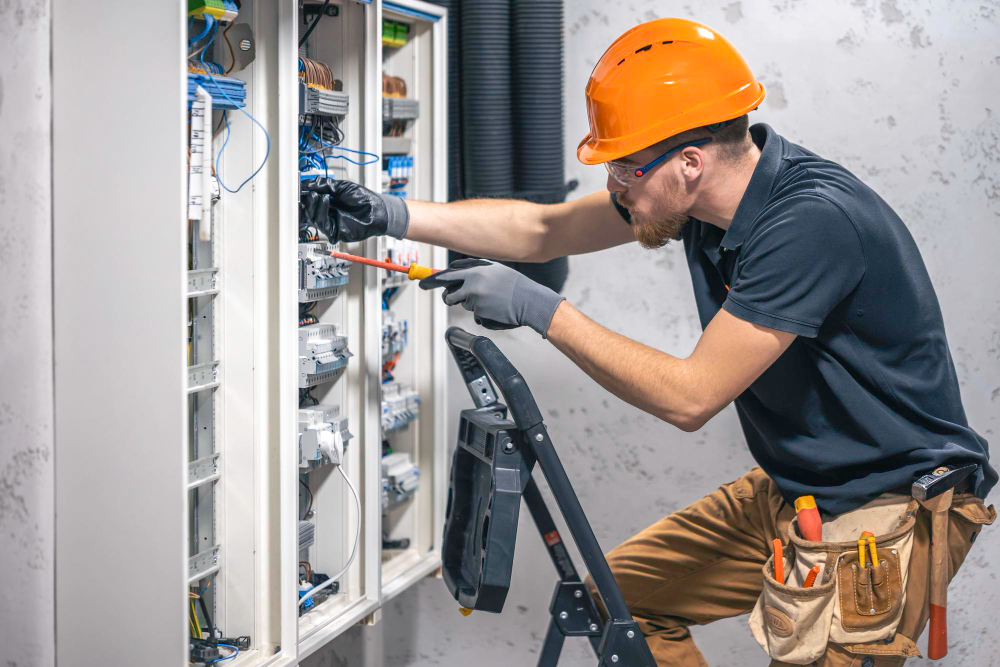
Electrical safety is something most homeowners rarely think about until a problem occurs. Yet modern homes rely heavily on electricity for lighting, appliances, heating, cooling, and entertainment. Understanding how safety devices work can help protect your household from serious electrical accidents.
One of the most important safety devices in Australian homes is the Residual Current Device (RCD). Many homeowners find themselves asking: what is an RCD? Is one safety switch in the switchboard truly enough to protect a modern home?
This guide explains how RCDs work, why they are essential for electrical safety, and why modern homes often require more than one safety switch.
What Is an RCD?
A Residual Current Device, or RCD, is an electrical safety switch designed to protect people from electric shock. It constantly monitors the flow of electricity through a circuit and automatically shuts off power if it detects an imbalance.
Normally, electricity flows through a circuit and returns through the neutral wire. If a fault occurs, such as electricity passing through a person to the ground, the RCD detects this difference and disconnects the power within milliseconds. This fast response significantly reduces the risk of serious injury or electrocution.
Because of their importance, RCDs are now mandatory in many Australian electrical installations.
Why RCDs Are So Important for Home Safety
Knowing how residual current devices work also means understanding why they are essential for modern homes.
Electrical faults can occur in many ways, including:
- damaged wiring
- faulty appliances
- water contact with electrical systems
- damaged extension cords
- DIY electrical modifications
When these faults occur, electricity may flow where it should not. Without protection, the result could be electric shock or fire. An RCD works as a protective barrier between these faults and your household.
Many electricians recommend installing RCDs on multiple circuits to ensure the highest level of safety.
Why One Safety Switch Might Not Be Enough
Many older homes have only a single safety switch installed in the switchboard. While this is better than having none, relying on one RCD may not provide complete protection. A single device usually protects only one circuit or group of circuits. If a fault occurs in another part of the home that is not covered, the protection may not activate. This is why electricians often recommend installing RCD protection on several circuits throughout the house.
A switchboard upgrade can ensure each major circuit, such as lighting, power points, and appliances, has dedicated protection.
How Modern Switchboards Improve Electrical Safety
Electrical systems have evolved significantly over the years. Modern switchboards are designed to provide better safety and control. Instead of relying on a single safety switch, updated boards often include multiple RCDs or combination circuit breaker safety switches.
This allows different areas of the house to be protected individually. If a fault occurs in one circuit, the rest of the home can remain operational.
For example:
- Kitchen appliances can be protected separately
- Lighting circuits can have their own RCD
- Outdoor circuits can be isolated independently
This setup improves both safety and convenience.
Signs Your Home May Need More RCD Protection
Some homes still operate with minimal electrical protection. If your property was built decades ago, it may not meet modern safety standards.
Common signs include:
- An older switchboard with ceramic fuses
- Only one safety switch is installed
- Frequent circuit breaker trips
- Recently added appliances are increasing the electrical demand
If you notice these issues, a licensed electrician can perform an electrical safety inspection to determine whether additional RCD protection is needed.
Where RCDs Should Be Installed in the Home
To provide effective protection, RCDs are usually installed on circuits supplying:
- power points
- lighting circuits
- outdoor electrical outlets
- kitchens and bathrooms
- garages and workshops
Homes with upgrades such as power point installation, ceiling fan installation, or lighting installation services may benefit from improved circuit protection to match modern electrical usage.
Installing additional RCDs ensures that new electrical equipment operates safely within the system.
Testing Your Safety Switch
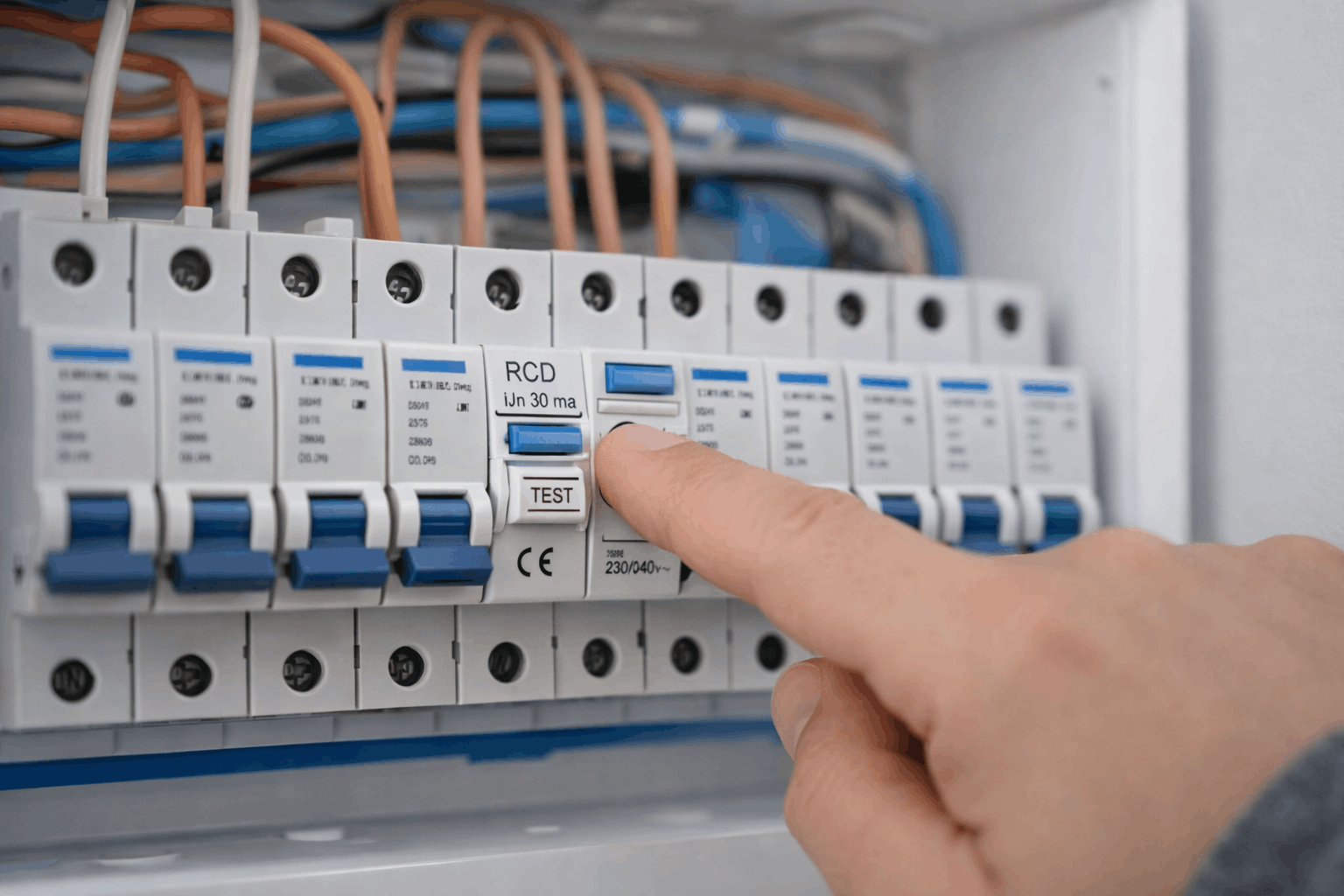
Even if your home already has RCD protection, it is important to test the device regularly. Most safety switches include a “test” button. Pressing it should immediately cut power to the circuit. If the switch does not trip, it may indicate a faulty device that needs replacement.
Electricians often recommend testing safety switches every few months to ensure they function correctly.
RCDs and Electrical Compliance in Australia
Australian electrical safety standards require RCD protection in many situations, particularly for new installations and renovations. When electrical upgrades are performed, such as house rewiring or switchboard upgrades, RCD protection is typically installed to meet current regulations.
Compliance helps ensure that electrical systems remain safe for both residents and future property owners.
Why Professional Installation Matters
Electrical work in Australia must be carried out by licensed professionals. Installing or modifying safety switches incorrectly can compromise the protection they provide.
Professional electricians ensure:
- Circuits are correctly identified
- RCDs are properly rated
- Switchboards comply with regulations
- Wiring connections are secure
A properly installed system provides reliable protection for years to come.